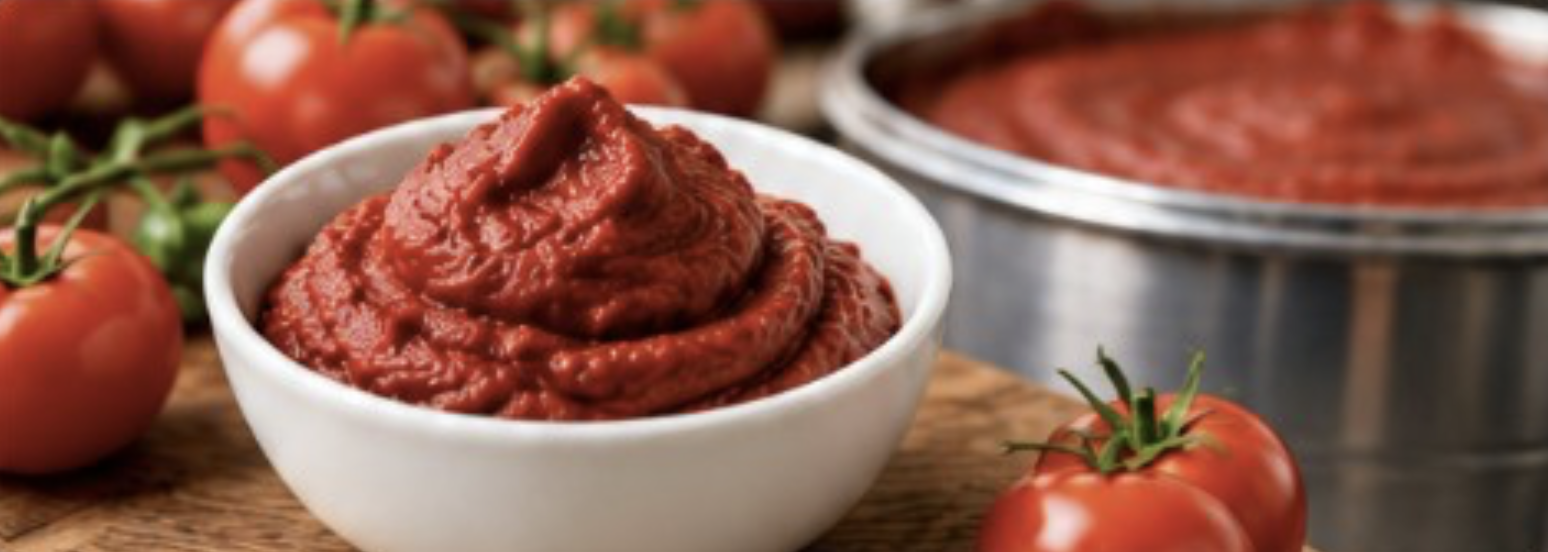
Buying bulk tomato paste is not simply a matter of finding the lowest price per kilogram. For food manufacturers, the more important questions are whether the product matches the required specification, performs consistently in production, and provides a reasonable cost based on its usable solids. Packaging, storage, documentation, and receiving inspection also need to be considered before a large order is placed.
A practical purchasing process should therefore start with the product specification and continue through sample testing, cost comparison, delivery planning, and final acceptance. The following points can help buyers evaluate bulk tomato paste more effectively.
1. Check the Tomato Paste Specifications
The first step is to review the product specification rather than relying only on the product name. Different tomato paste products can have different concentrations and processing characteristics, so the actual specification should be confirmed before comparing quotations.
Verify Soluble Solids and Concentration
Soluble solids are an important factor when comparing concentrated tomato products because they affect how much product is required in a recipe. Buyers should check the stated soluble solids or concentration level in the supplier's specification sheet and make sure it matches the intended application.
The Codex Standard for Processed Tomato Concentrates provides an international reference for processed tomato concentrates and their quality characteristics. However, buyers should still use the actual product specification when evaluating a specific commercial product.
Review Ingredients and Product Quality
Check the ingredient declaration and other available quality information before placing an order. Color, flavor, odor, consistency, and the presence of visible defects can all influence how tomato paste performs in food manufacturing.
USDA's Canned Tomato Paste Grades and Standards can be used as a useful reference when reviewing quality factors such as color, flavor, odor, and defects.
2. Compare Cost Based on Usable Tomato Solids
Comparing tomato paste only by price per kilogram can produce the wrong conclusion. If two products have different soluble solids levels, the cheaper product may not necessarily provide the lower cost for the amount of tomato solids required in production.
Look Beyond the Price per Kilogram
For example, assume Product A costs $2.00 per kilogram and contains 28% soluble solids, while Product B costs $2.40 per kilogram and contains 36% soluble solids. Product B has a higher purchase price, but its higher concentration changes the comparison.
Calculate the Cost of Soluble Solids
A simple preliminary calculation is:
Cost per kg of soluble solids = Price per kg ÷ Soluble solids fraction
| Item | Product A | Product B |
|---|---|---|
| Price per kg | $2.00 | $2.40 |
| Soluble solids | 28% | 36% |
| Cost per kg of soluble solids | $7.14 | $6.67 |
This is only a comparison example, not a Food Junc product specification or quotation. Actual purchasing decisions should also consider recipe requirements, processing losses, freight, packaging, and other costs.
This approach is particularly useful when comparing bulk tomato paste quotations from different suppliers because it shifts the focus from the purchase price to the amount of usable concentrated material obtained.
3. Test Samples Before Placing a Bulk Order
A specification sheet can tell buyers a lot, but it cannot completely replace a production trial. A sample test is one of the most practical ways to determine whether the tomato paste is suitable for the intended application.
Check Color, Flavor and Consistency
During the sample evaluation, check whether the color and tomato flavor meet the requirements of the finished product. Consistency should also be considered, especially when the paste will be mixed with other ingredients or processed further.
The FDA food regulations and guidance provide a broader regulatory reference for food manufacturers evaluating ingredients and finished food products. Buyers should also confirm the specific regulatory requirements applicable to their destination market.
Run a Small Production Trial
Instead of evaluating the sample only by opening the container, use it in a small-scale version of the actual recipe. For example, a manufacturer producing pizza sauce can test how the paste performs after dilution, seasoning, mixing, and cooking.
Record the amount used, processing conditions, final consistency, color, flavor, and any adjustment needed. This makes it easier to compare different samples using the same criteria.
4. Confirm Packaging, Storage and Delivery Requirements
Packaging is another point that should be confirmed before purchasing in bulk. The right packaging depends on production volume, storage capacity, consumption speed, and the buyer's handling process.
Choose Packaging for Your Production Volume
Buyers should confirm net weight, package condition, labeling information, and whether the packaging is suitable for transportation and warehouse handling. Product labels should also provide enough information for receiving checks and batch identification.
The Codex General Standard for the Labelling of Prepackaged Foods provides a useful international reference for food labeling information.
Check Storage and Delivery Conditions
Before ordering, confirm the storage requirements and product shelf-life information provided for the actual product. Buyers should also consider how quickly the product will be consumed after delivery.
For large-volume purchasing, delivery planning is important. Ordering too much at once can increase inventory pressure, while ordering too little can create unnecessary production interruptions. The order quantity should therefore be connected to actual production demand and warehouse capacity.
5. Set Quality and Acceptance Criteria Before Ordering
One of the most overlooked parts of bulk ingredient purchasing is defining what happens when the goods arrive. Quality requirements should be discussed before the purchase order is confirmed rather than after a problem occurs.
Agree on Specifications Before Production
The buyer and supplier should have a clear understanding of the agreed product specification. Depending on the product and market, this may include soluble solids, ingredients, sensory characteristics, packaging information, batch identification, and relevant quality documents.
The Codex General Principles of Food Hygiene also provides a useful framework for food businesses when establishing appropriate hygiene and control practices.
Define the Receiving Inspection Process
When bulk tomato paste arrives, the receiving team should know what needs to be checked. Packaging damage, quantity, labels, batch information, and accompanying documents can be verified before the goods enter normal inventory.
For larger contracts, buyers can also agree in advance on the procedure for handling products that do not meet the agreed specification. Clear acceptance criteria can reduce misunderstandings and make supplier management easier.
Frequently Asked Questions
What specifications should buyers check when purchasing bulk tomato paste?
Start with soluble solids or concentration, ingredients, sensory characteristics, packaging, storage requirements, and available quality documentation. The exact requirements depend on the intended food application and destination market.
Why should buyers test a sample before placing a bulk order?
A sample test allows manufacturers to evaluate the product under actual processing conditions. It can reveal differences in flavor, color, consistency, and recipe performance before a large quantity is purchased.
Is the lowest price per kilogram always the best option?
No. Products with different concentration levels should be compared based on their actual production value. Soluble solids, recipe usage, freight, packaging, and processing performance can all affect the final cost.
Conclusion
Buying bulk tomato paste requires more than comparing supplier quotations. A better approach is to check the product specification, compare cost based on usable solids, test samples in the intended recipe, confirm packaging and storage requirements, and establish clear acceptance criteria before delivery.
For manufacturers, this process can make bulk purchasing more predictable and reduce the risk of selecting a product that looks inexpensive but does not perform as expected in production.
References
- Codex Alimentarius Commission. Standard for Processed Tomato Concentrates (CXS 57-1981).
- USDA Agricultural Marketing Service. Canned Tomato Paste Grades and Standards.
- U.S. Food and Drug Administration. 21 CFR §155.191 — Tomato Concentrates.
- Codex Alimentarius Commission. General Principles of Food Hygiene.
- Codex Alimentarius Commission. General Standard for the Labelling of Prepackaged Foods.