Double concentrated tomato paste is made by removing water from processed tomatoes. This process boosts the amount of tomato solids. It offers strong tomato flavor, rich color, and thick consistency. This makes it useful for food manufacturing and recipe development.
For food manufacturers, understanding concentration is key. It aids in product selection, helps with ingredient calculations, and improves quality control. The term “double concentrated” doesn’t ensure the same concentration for every producer. Buyers should confirm the actual product specifications before purchasing.
What Is Double Concentrated Tomato Paste?
Double concentrated tomato paste comes from concentrating tomato pulp or juice. This is usually done by evaporating the liquid. Removing water increases the proportion of tomato solids and produces a thicker product.
According to the USDA's Canned Tomato Paste Grades and Standards, US standards define tomato paste based partly on its natural tomato soluble solids content. Commercial products often use different concentration terms. Buyers should check the specifications and not assume “double concentrated” means the same value every time.
Understanding °Brix
°Brix is commonly used to measure soluble solids concentration in tomato products. It helps buyers compare products and determine whether a sample meets an agreed specification.
The USDA's Tomato Products Solid Content Determinations details how to measure solids in tomato products.
°Brix is not the same as total solids. Refractometer readings mainly show soluble solids. When comparing tomato paste, follow the manufacturer's measurement method and specifications.
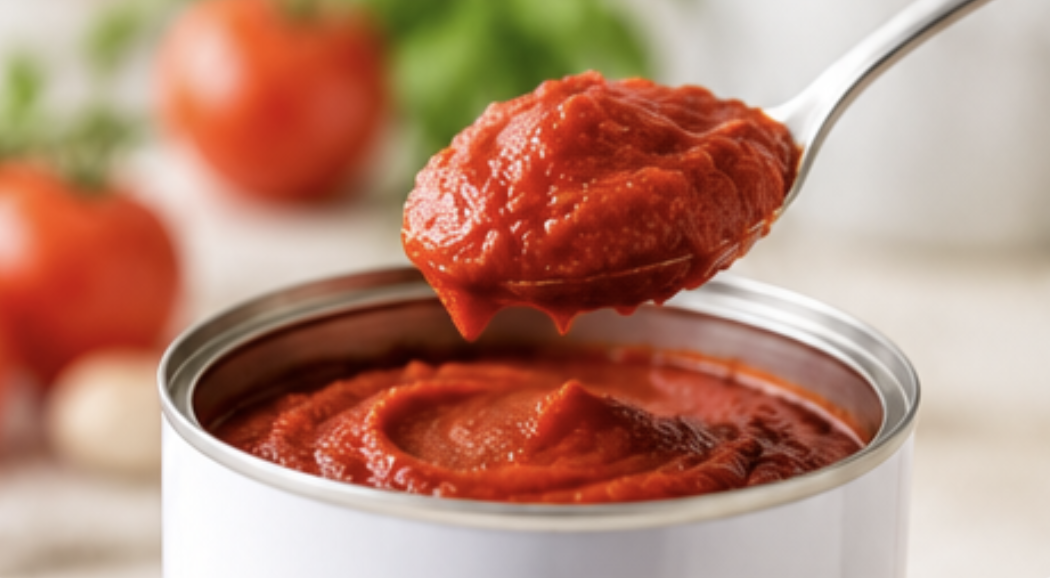
Key Characteristics of Double Concentrated Tomato Paste
- Concentration: A higher proportion of tomato solids means less water relative to the solids content. Verify the actual concentration in the product specification.
- Color and flavor: Tomato variety, maturity, and processing conditions can influence color and flavor. The USDA tomato paste quality standards consider characteristics such as color, flavor, odor, and defects.
- Consistency: Double concentrated tomato paste is usually thick, but texture can vary with processing and raw tomato characteristics. Concentration alone does not guarantee a particular consistency.
- Batch consistency: Reliable specifications help manufacturers reproduce recipes. Differences in concentration, color, or texture can affect ingredient quantities and final product quality.
How to Use Double Concentrated Tomato Paste
Double concentrated tomato paste is used in recipes that require a concentrated tomato ingredient. Applications include pizza sauce, pasta sauce, soups, prepared meals, and tomato-based condiments.
The correct quantity depends on the formulation, the paste's concentration, and the desired flavor and texture. There is no single addition rate suitable for every recipe.
Adjusting Recipe Quantities
When switching tomato paste, first check the soluble solids content and then adjust the recipe as needed. A different concentration may require a different quantity to achieve a similar contribution of tomato solids.
Food developers can estimate soluble solids from a measured amount of paste using its declared solids percentage. This provides a practical starting point for recipe adjustment. However, calculations alone cannot predict final flavor, color, or texture, so small-batch testing remains important.
Testing Before Production
Prepare a trial batch and assess tomato flavor, color, thickness, and cooking performance. If liquid or other ingredients are added, record the quantities and evaluate the finished formulation.
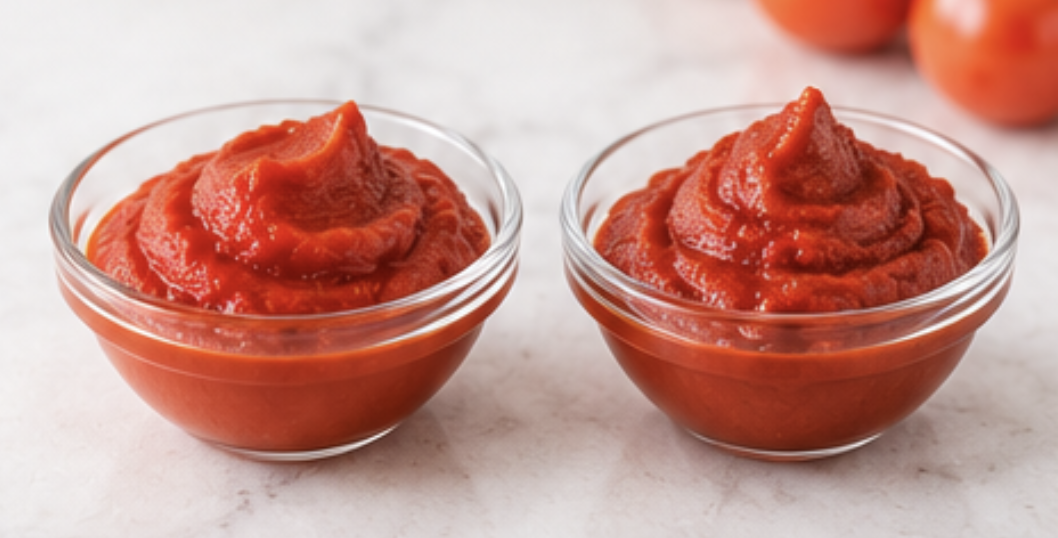
Once the desired result is achieved, document the recipe and processing conditions. This helps maintain consistency when the product moves into larger-scale production.
Double Concentrated vs. Regular Tomato Paste
The best comparison relies on actual specifications and recipe performance rather than product names alone.
| Factor | What to Compare |
|---|---|
| Concentration | Declared °Brix or soluble solids content |
| Recipe quantity | Amount required to meet the target formulation |
| Flavor and color | Suitability for the intended finished product |
| Consistency | Mixing and processing performance |
| Cost | Cost per required amount of tomato solids |
A more concentrated product may reduce the amount of paste needed in a recipe, but it is not automatically more economical. Buyers should consider purchase price, concentration, required quantity, and production-trial results.
How to Evaluate Double Concentrated Tomato Paste
Before ordering, food manufacturers should check the product specification and evaluate a sample where possible.
The US FDA regulation for tomato concentrates, 21 CFR § 155.191, provides a regulatory reference for tomato concentrates in the United States. International buyers should also check applicable destination-market requirements.
- Soluble solids: Confirm the declared concentration and measurement method.
- Ingredients: Review the ingredient declaration and any permitted additional ingredients.
- Color and flavor: Check whether the sample suits the intended formulation.
- Consistency: Evaluate mixing and processing performance.
- Documentation: Confirm the availability of product specifications and batch information.
- Storage: Follow the product label and supplier's instructions.
The Codex Alimentarius standards provide an additional reference for food product requirements. Confirm which standards apply to the specific product and destination market.
Frequently Asked Questions
Does double concentrated tomato paste need dilution?
Not always. Some recipes use it directly, while others require liquid or other adjustments to achieve the desired consistency.
How does °Brix affect tomato paste selection?
°Brix helps compare soluble solids concentration and plan ingredient quantities. It does not independently determine flavor, color, or overall quality.
How should double concentrated tomato paste be stored?
Storage requirements depend on packaging and preservation method. Follow the product label and supplier's instructions, including directions for storage after opening.
Conclusion
Double concentrated tomato paste offers a concentrated tomato base for food production and recipe development. To select a suitable product, buyers should verify the actual concentration, evaluate flavor and consistency, and review product documentation.
For Food Junc customers, checking specifications and testing samples before full production helps ensure the product meets formulation and purchasing needs.
References
- USDA Agricultural Marketing Service. Canned Tomato Paste Grades and Standards.
- USDA Agricultural Marketing Service. Tomato Products Solid Content Determinations.
- USDA Agricultural Marketing Service. U.S. Standards for Grades of Canned Tomato Paste.
- U.S. Food and Drug Administration. 21 CFR § 155.191 — Tomato Concentrates.
- Codex Alimentarius Commission. Standard for Processed Tomato Concentrates.